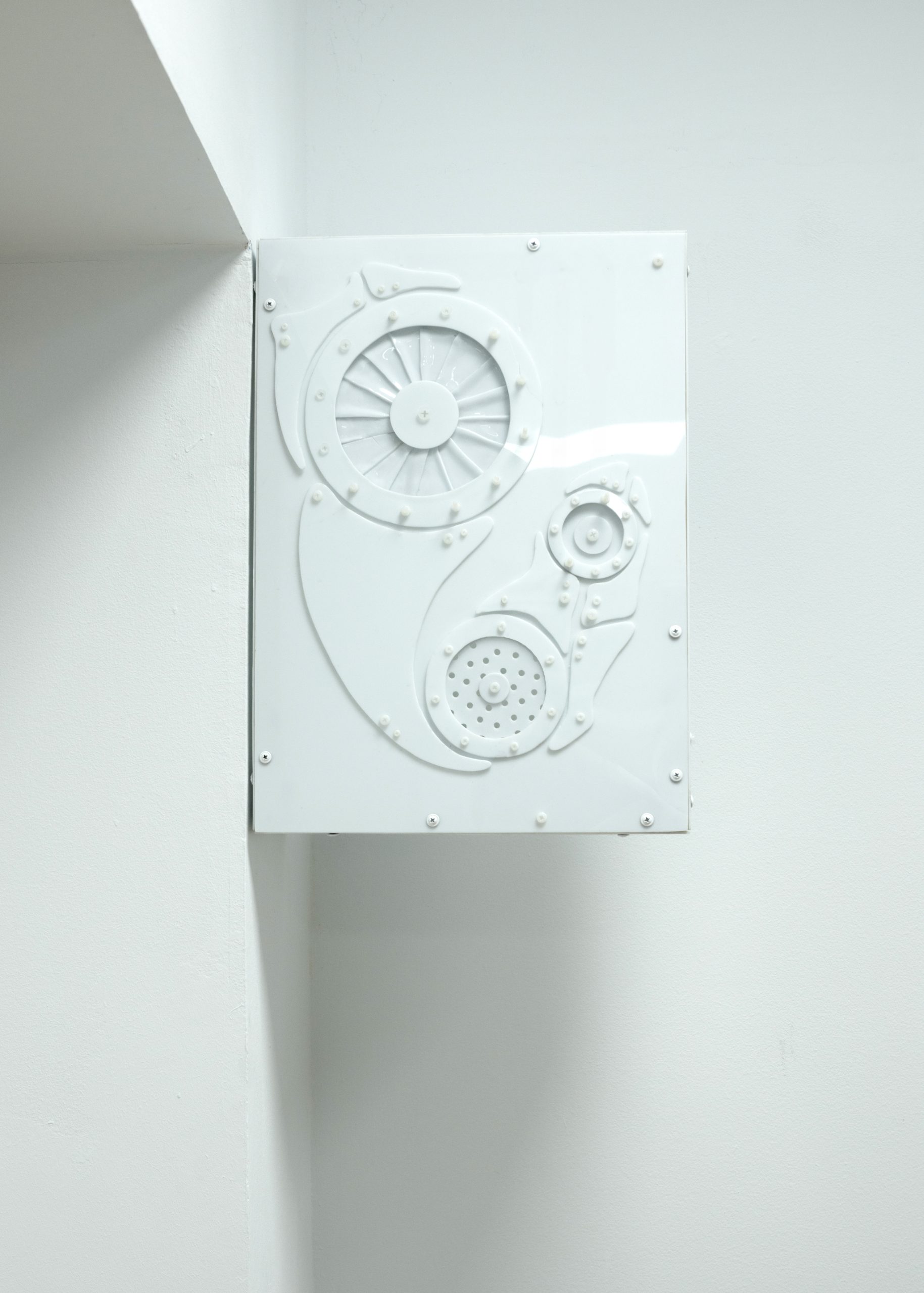
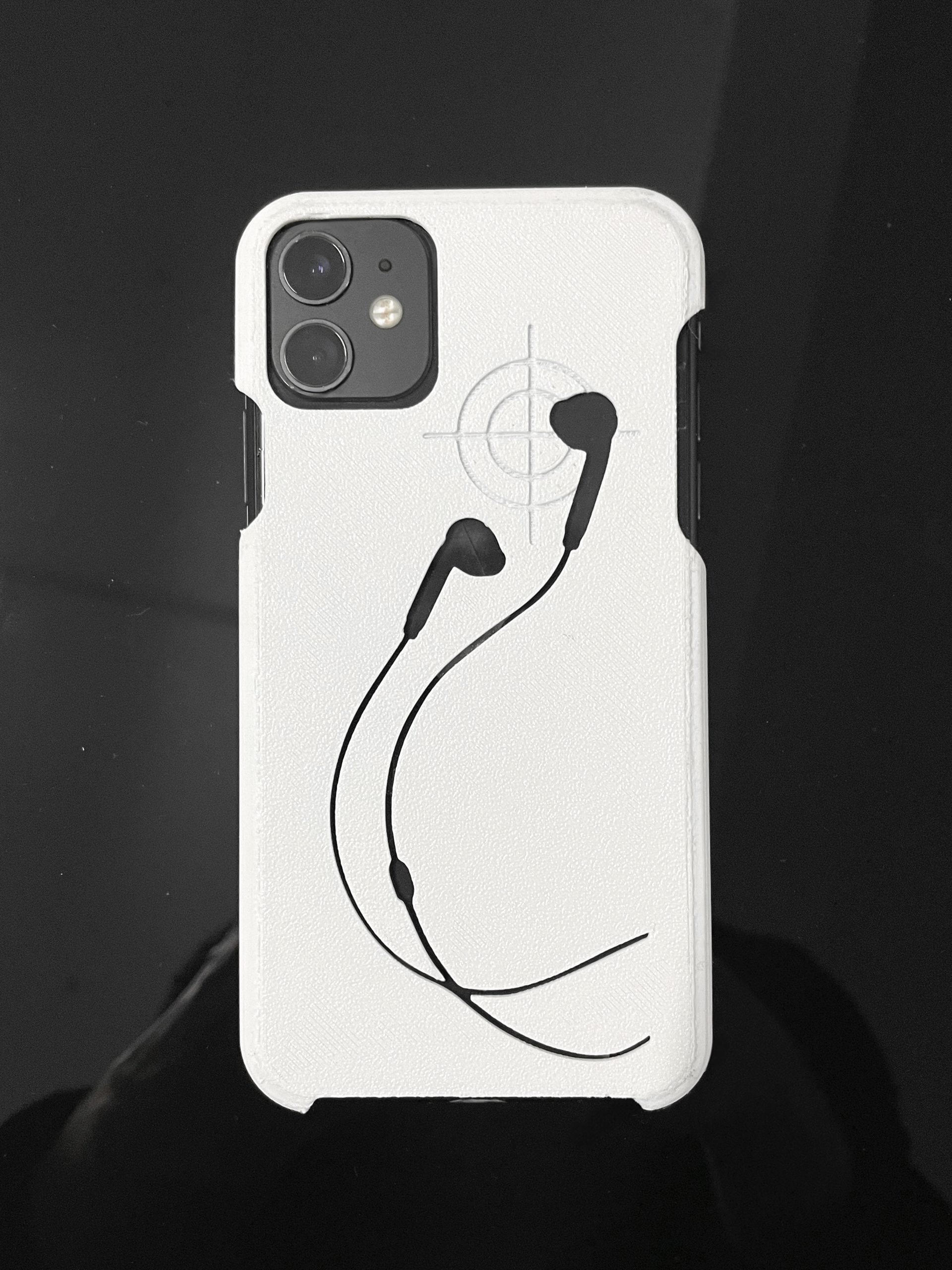
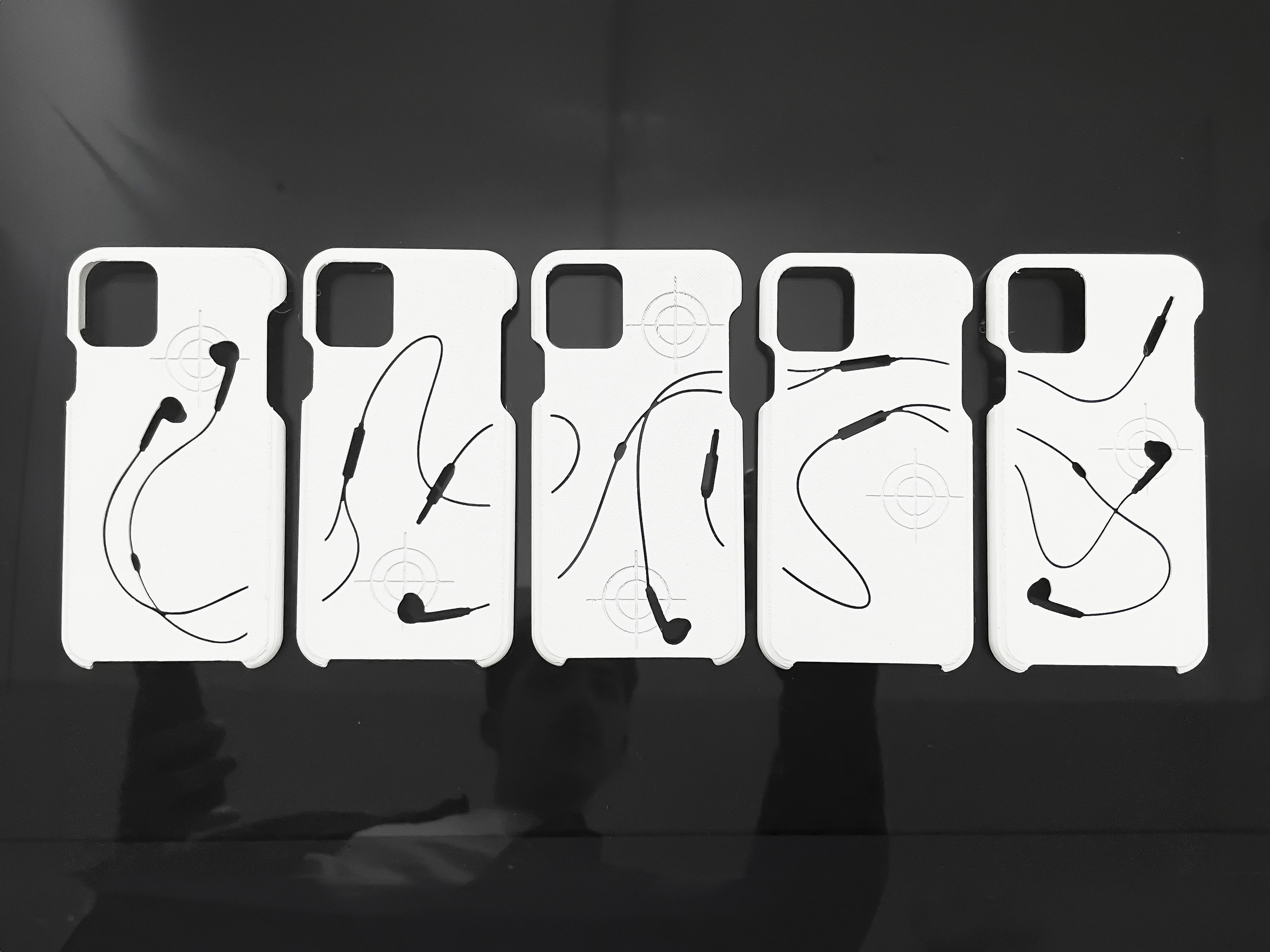
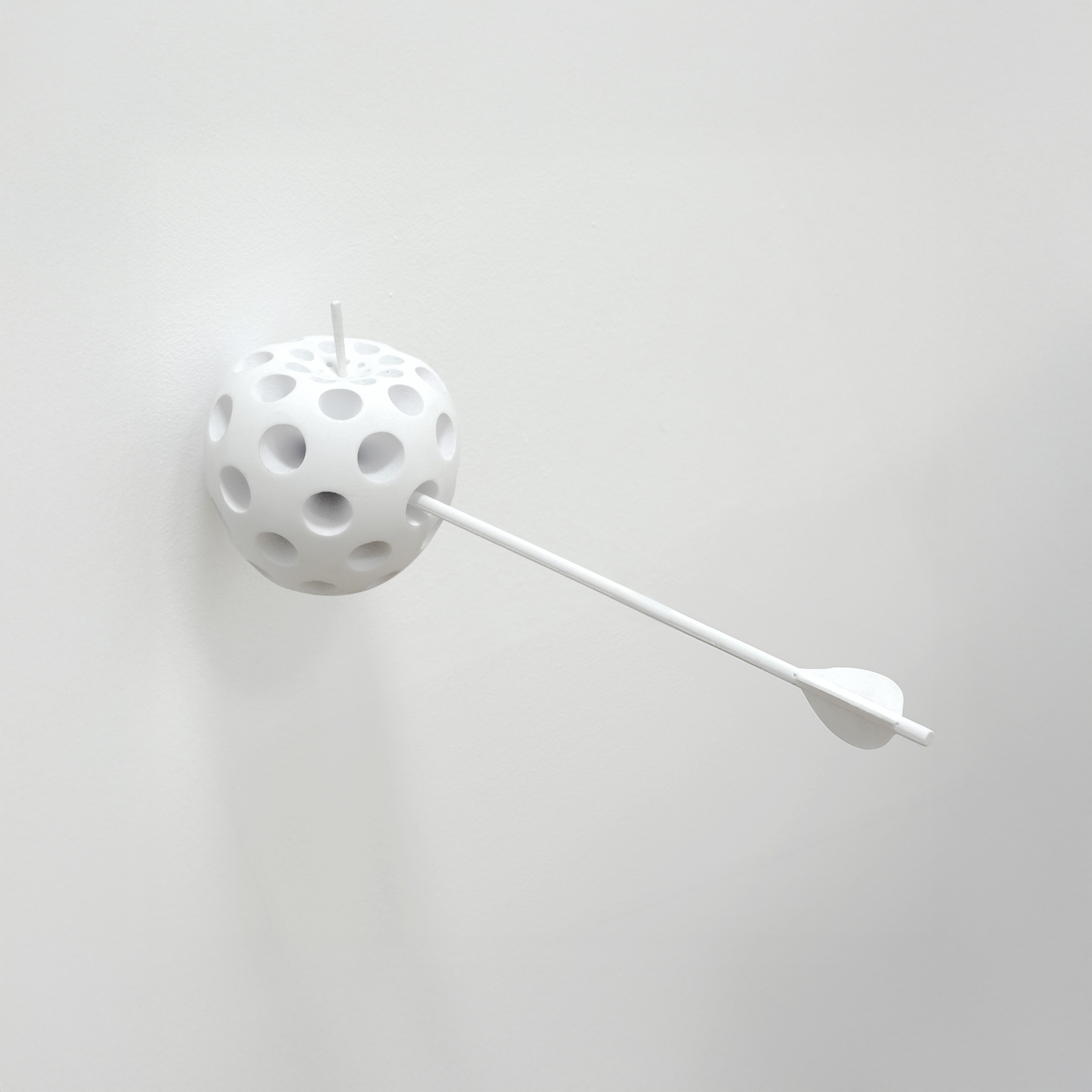
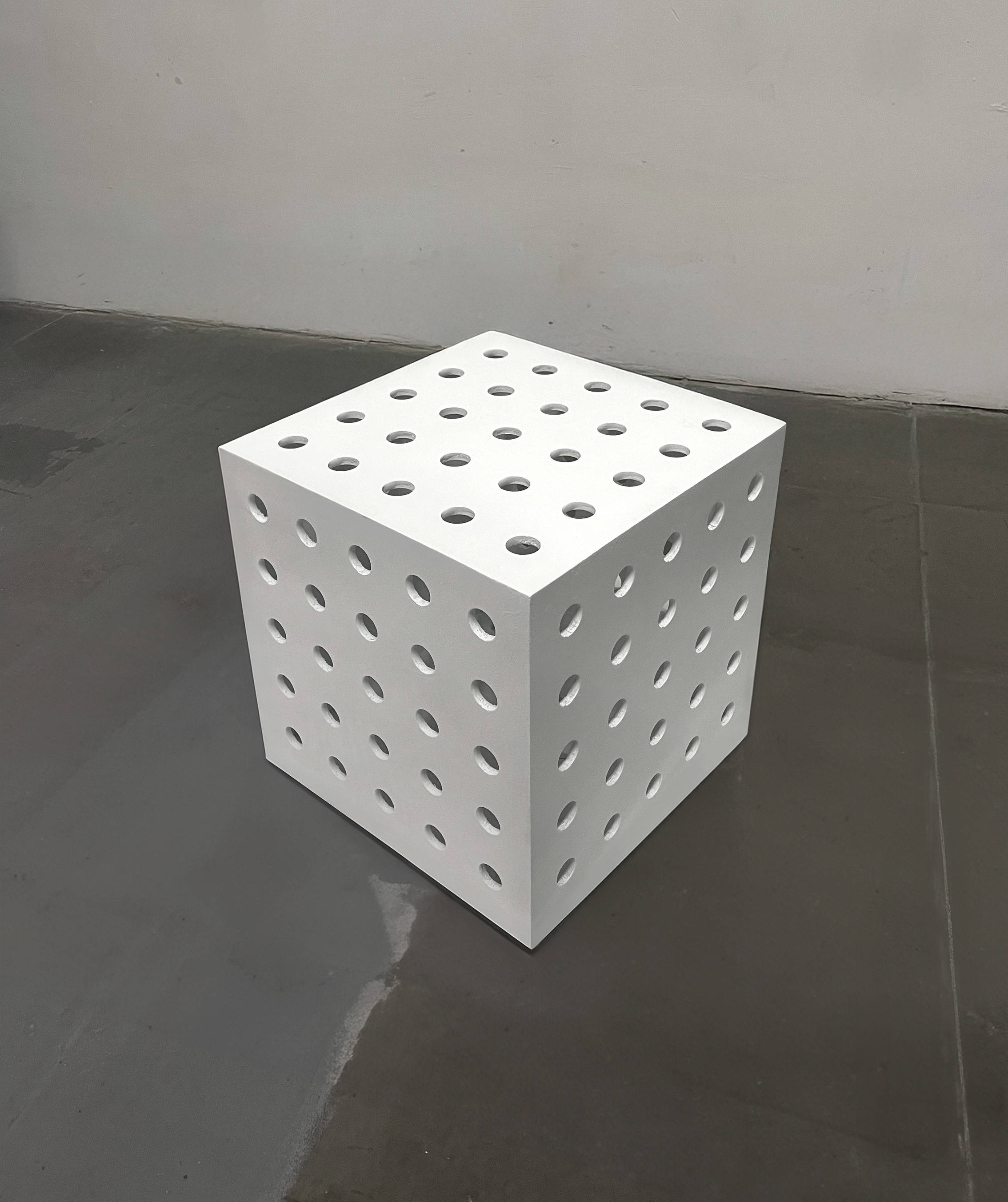
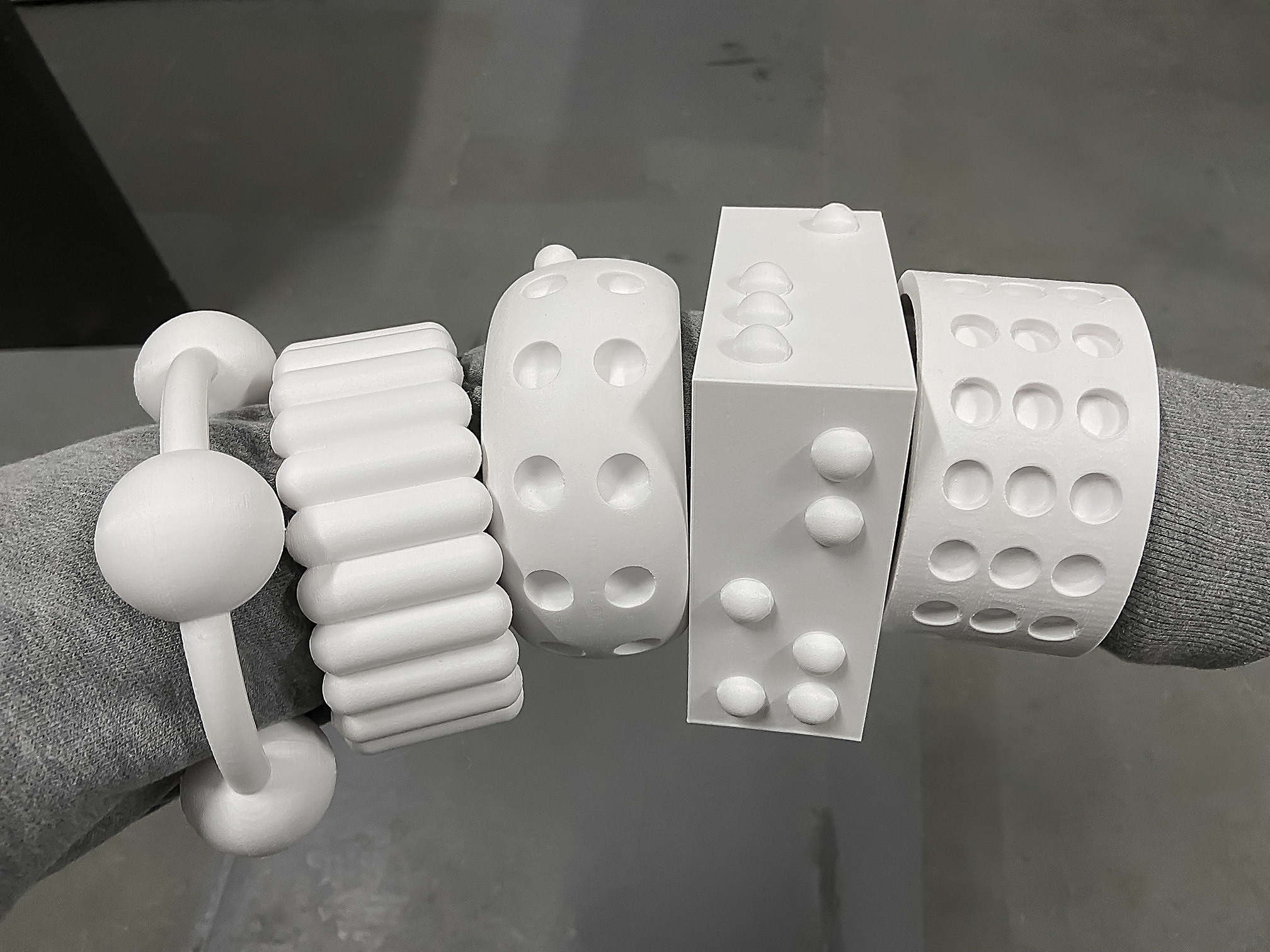
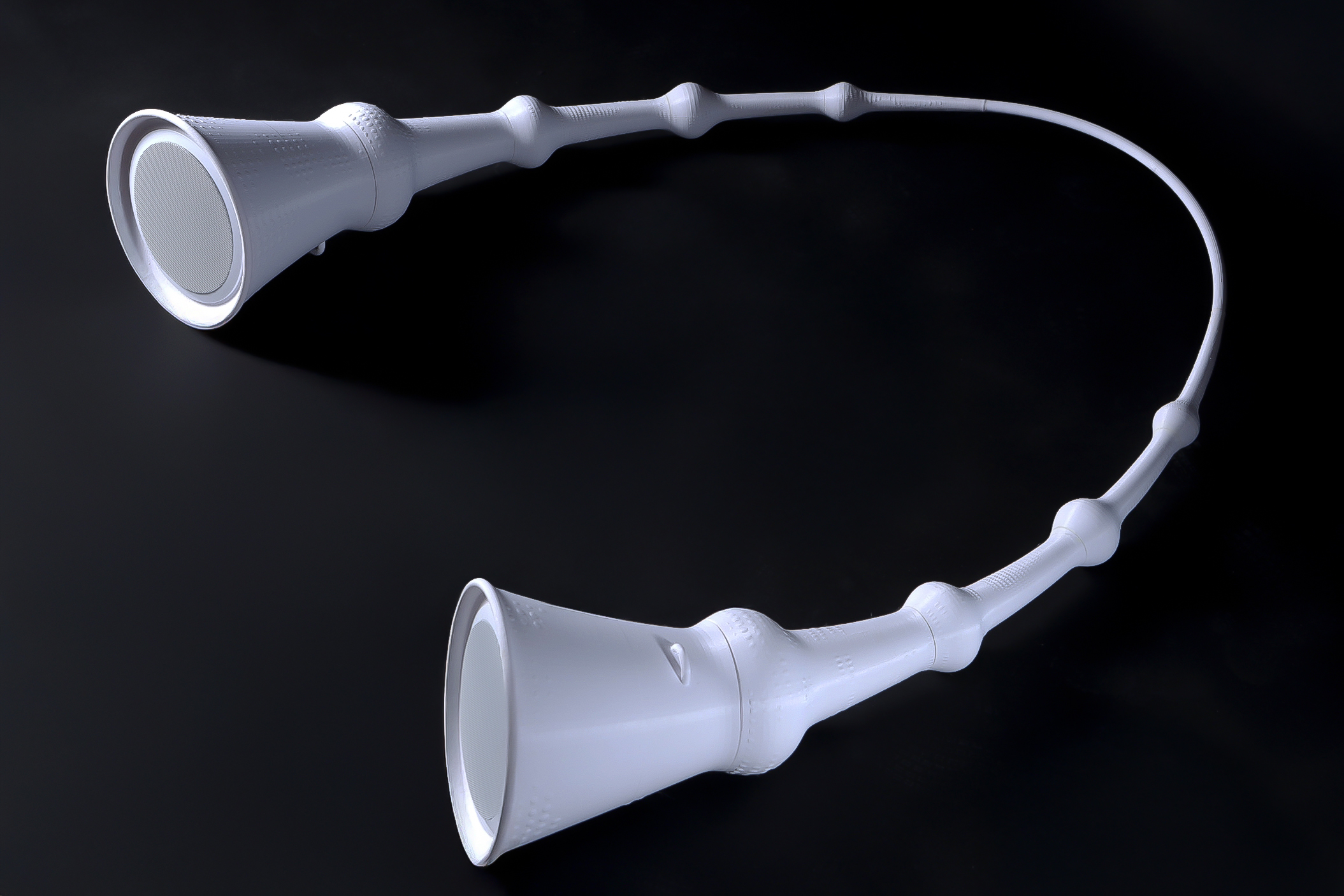
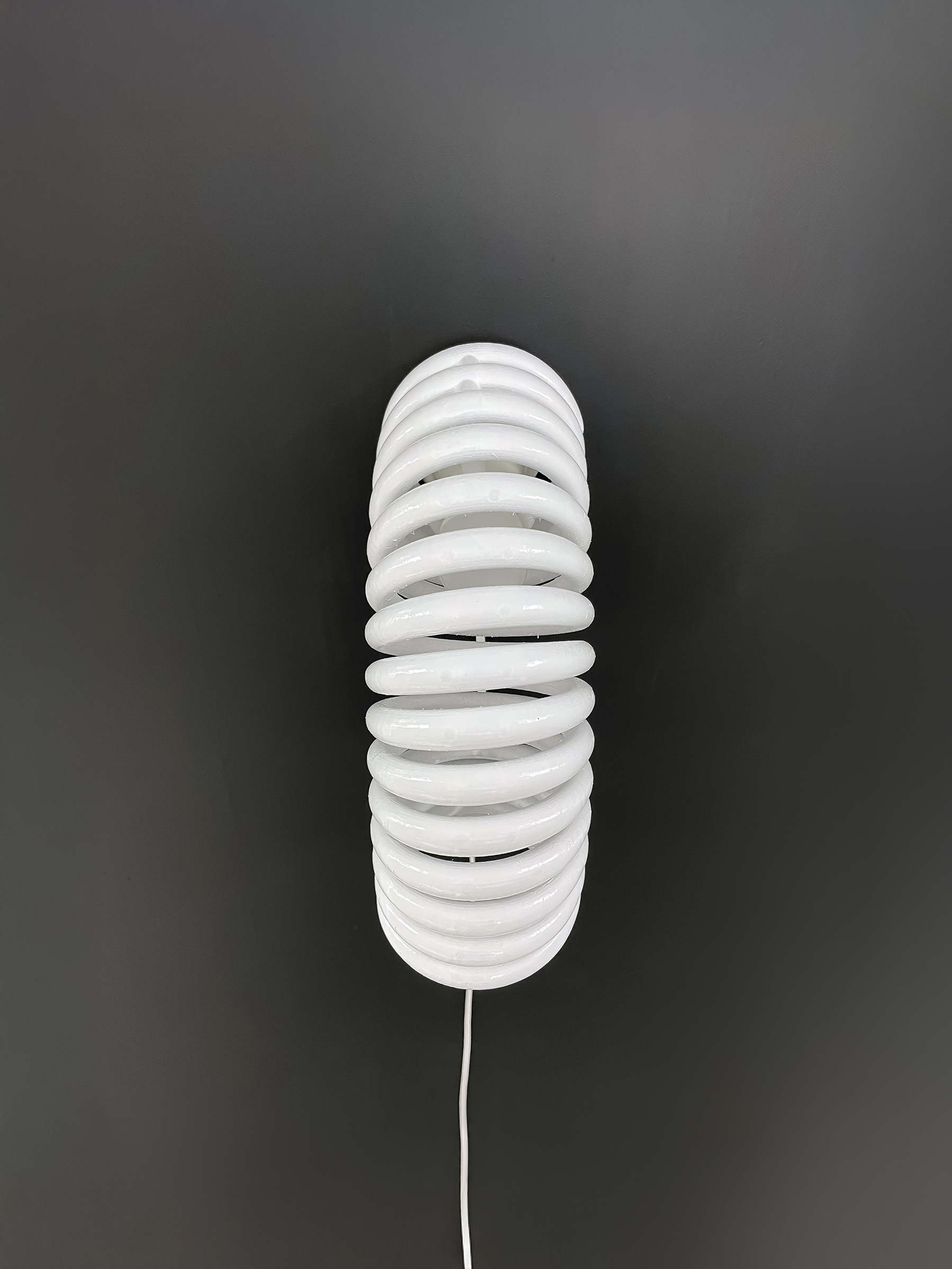
Apple Office is an office without employees. A clinical, luminous, and silent space where objects seem to have emancipated themselves from function. The pieces—3D-printed, white, standardized volumes—evoke prosthetics, tools, fragments of machinery, or technological devices that have lost their original purpose.
Each digitally generated form oscillates between the organic and the industrial: gears that do not mesh, perforated cubes, giant rings, and tactile capsules that recall both therapeutic toys and artificial organs. Taken together, the pieces form a kind of anatomical inventory of the posthuman era: a laboratory of interfaces, where touch becomes design and design becomes symptom.
Apple Office offers a reflection on the fetishism of pure form and the desire for control that permeates the technological imagination. In contrast to the promise of transparency and efficiency, the sculptures reveal the anxiety of a system that aestheticizes the aseptic and transforms skin, object, and knowledge into a single white surface.